Geographic Segmentation
It is well known that people with similar demographic and psychographic characteristics
tend to live nearby, for example, in suburbs, counties, shires, states, regions, countries, etc.
People living within the same geographical boundaries often exhibit similar buying
patterns. This is in part due to similarities in demographic and psychographic characteristics
of residents. This phenomena is further enforced by local weather, environment,
and cultural differences. Segmenting markets along geographical boundaries can
lead to more specialized and focused marketing approaches.
Geographic segmentation can use the following information;
- National census data: National census includes various demographic and psychographic
information on residents of geographical segments: median income, age, education, and so on.
National census information is available from;
- Geographic Information Systems (GIS): These are digital mapping systems
containing geographic data allowing manipulation of data. Certain geographic information
may be used in segmentation. For example, average temperature, rainfalls, and so on.
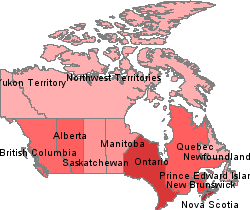
More important use of GIS system is plotting results of geographic segmentation on a map
so that important geographical clusters can be identified.
- Customer behavioral information: Customer density, past purchasing behaviors,
and products they bought can be added to geographical segmentation processes.
|
Geographic Segmentation and (Sales) Trend Analysis/Forecast
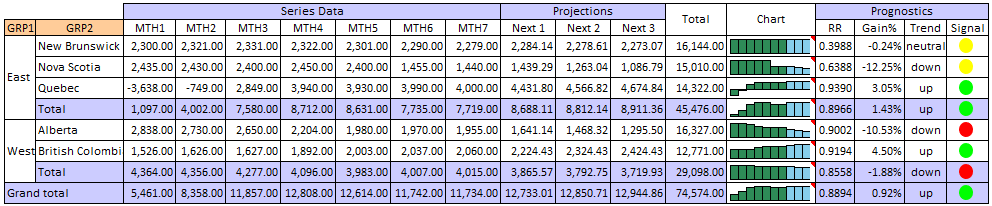
Time-series (sales) trend analysis can be used in geographic segmentation.
Using time-series trend analysis tools,
geographic regions with similar (sales) trends and patterns can be
identified and grouped together as segments. This method can improve
quality of segmentation significantly.
The following figure shows time-series trend analysis on geographic segments.
For more, please read Sales Trend Analysis and Sales Forecasting.
Examples of Geographical Segmentation
Geographical segmentation can be used for various purposes. The followings are
geographic segmentation examples;
-
Shop outlets:
Locations for new shop outlets can be identified.
-
Advertising:
Areas for advertisement can be identified. Segmentation can also reveal
information for advertisement media.
-
Product selection:
Different geographic segments have differing consumption patterns.
Introducing different products for different geographic segment can
bring more sales!
-
Military recruitment:
Military recruits have certain demographic attributes. Focusing on geographic
segments with such profiles, military can find new recruits more efficiently.
-
Catalog sales:
In catalog sales direct marketing, generally demographic information of
customers is not available. Census information derived from geographic
data can be used to develop better customer segmentation and predictive
models.
For more, also read Customer Segmentation.
|
 Rosella
Machine Intelligence & Data Mining
Rosella
Machine Intelligence & Data Mining
